It’s Time To Rethink HR
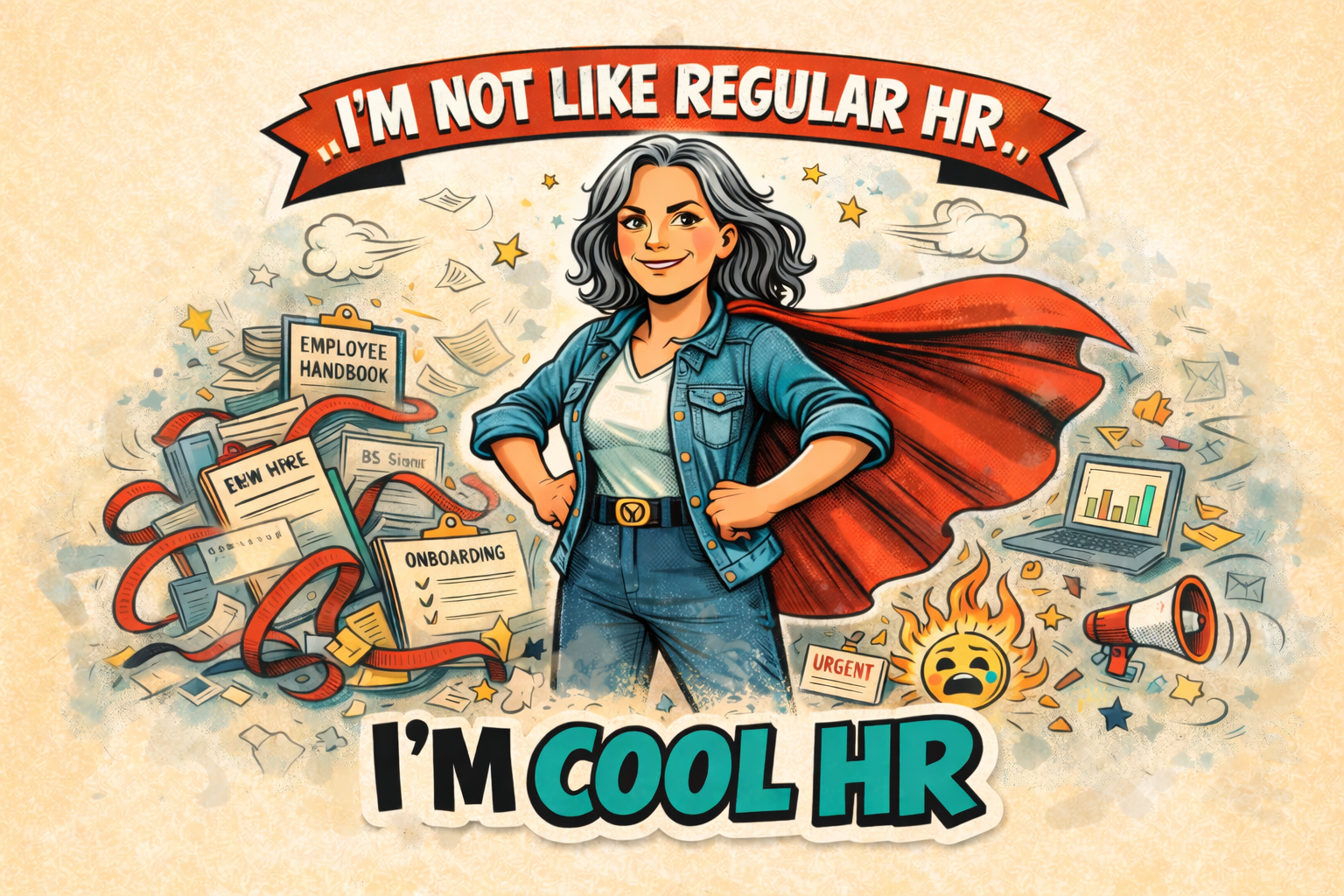
Let’s just say it:
the way we’ve been doing HR isn’t working — unless the goal is to frustrate employees, confuse managers, and keep leaders blissfully unaware of what’s actually happening inside their own organizations.
Which, frankly, describes more companies than any of us would like to admit.
We keep pretending this is all “normal workplace stuff,” when really it’s just dysfunction with a logo.
Employees are asking:
“Does anyone know what the growth path is here?”
“Why is conflict management treated like Voldemort?”
“Why does my manager have the EQ of a folding chair?”
“What exactly is HR’s job again?”
Leadership, meanwhile, is asking:
“Why is everyone quitting suddenly?”
“Why does our culture survey look like a hostage note?”
“Did we not just rebrand our values last quarter?”
“Can someone explain how succession planning actually works?”
And HR is somewhere in the middle with the world’s least funny punchline:
“Please see the updated policy attached.”
The HR We Inherited Wasn’t Built For Humans
HR’s legacy model was built for compliance, control, and risk minimization. Useful in 1954. A bit insufficient in 2026.
Business problems today are human problems:
misalignment
inconsistency
power gaps
unclear expectations
leadership avoidance
weak development
zero accountability structures
These cannot be fixed with:
pizza parties
branded swag
anonymous surveys
quarterly town halls
“coffee chats”
or whatever the latest engagement platform is promising this year.
Those are vibes.
Vibes do not fix systems.
Humans Are the Operational Core — Stop Treating Them Like a Line Item
Every investor deck and leadership retreat insists that “talent is our differentiator.” Yet most organizations run talent like a yard sale — vague pricing, inconsistent quality, and a whole lot of things nobody really knows what to do with.
When you don’t have systems, humans fill in the gaps with guesswork:
Managers make up their own rules.
Employees negotiate for opportunities based on likability or proximity.
Leadership assumes everyone is aligned because their direct reports nodded in a meeting.
HR tries to duct-tape over everything with policies and engagement surveys.
This is not strategy.
It’s improv comedy with legal risk.
The Rethink: HR as the Capability Engine
The organizations that are actually thriving right now are doing something radical:
They’re treating HR as infrastructure — not admin.
That means investing in:
✔ defensible processes
✔ leadership capability
✔ performance philosophy
✔ talent pipelines
✔ manager enablement
✔ clear growth paths
✔ real feedback loops
✔ systemic alignment
✔ and all the stuff nobody had the time or the frameworks for before
This is not “the soft stuff.”
This is the business.
So Why Humans Rethought?
Because HR doesn’t need more warm-and-fuzzy slogans or new engagement platforms. HR needs tools, clarity, and systems that make work actually work.
What we build here:
teaches managers how to actually lead (not just supervise)
gives HR the infrastructure they’ve been begging for since 1998
tells leaders what’s really happening (not what they hope is happening)
makes growth quantifiable instead of political
reduces bias without adding bureaucracy
diagnoses misalignment before it becomes an investigation
gives employees a path that isn’t “cross your fingers and impress the right VP”
Also — and this really matters — we do it in plain English.
No TED-Talk jargon. No sterile HR-speak. No leadership bumper sticker philosophy.
Just practical systems that make humans and businesses function better.
Because Humans Aren’t the Problem — Lack of Systems Is
Humans are messy, emotional, ambitious, anxious, brilliant, inconsistent, sensitive, competitive, curious, and occasionally allergic to change.
But they’re not the enemy.
They are the competitive advantage.
The real enemy is pretending that complex human systems can run on gut instinct, good intentions, and a handbook no one reads until they’re in trouble.
If You’re Still Here, You’re Probably My People
If you’re the type of leader, founder, HR pro, or recovering employee who reads this and thinks:
Finally. Somebody said it.
Welcome.
It’s time to rethink HR.
And it’s time to rethink how we treat the humans who make the whole thing run.